



Did you know that 117.935 people are affected by statelessness in Germany?
At the end of 2020, the German Federal Statistical Office (Destatis) counted 26.445 stateless people and another 91.490 people with an unclear nationality. These numbers have been on the rise over the last years; especially the number of people with an ‘unclear nationality’ has increased significantly.
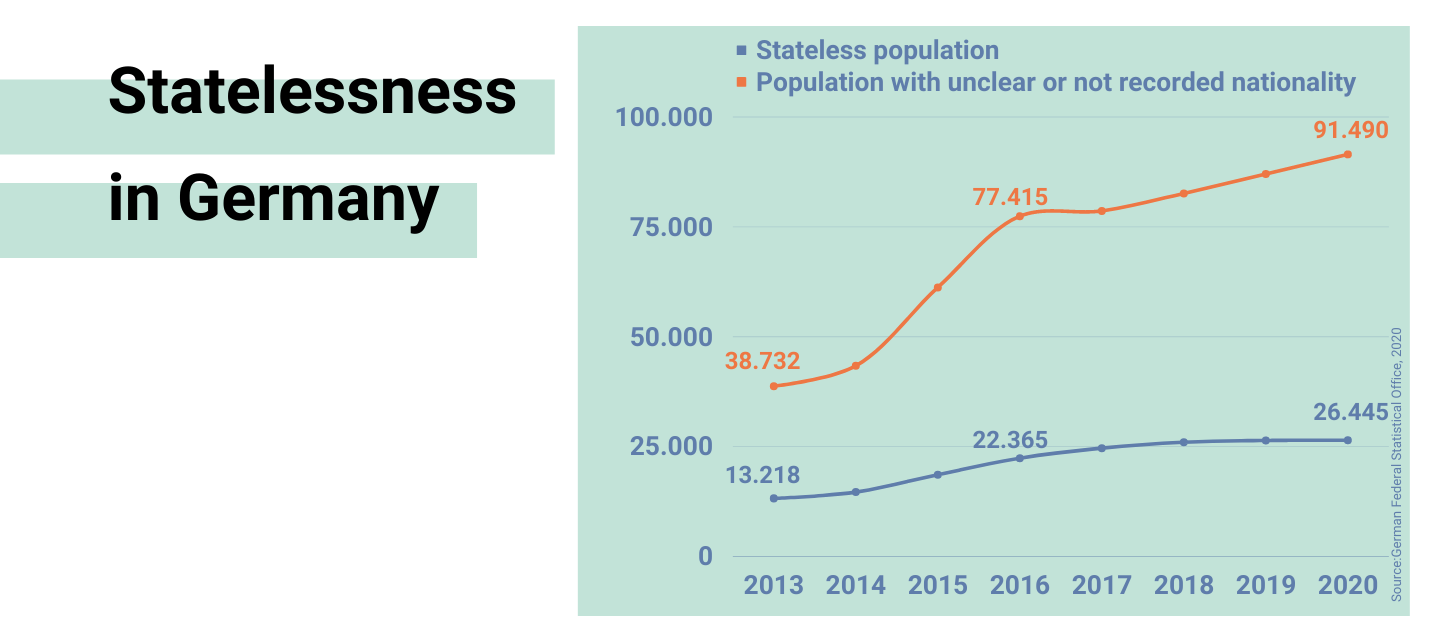
This is partly due to the way Germany deals - or rather, does not deal - with identifying statelessness. Without a comprehensive statelessness determination procedure in Germany, the path towards getting an official statelessness status is often difficult, long and expensive. As a result, statelessness often remains unrecognized, with people instead being recorded with an ‘unclear nationality’. This becomes a human rights issue, since ‘unclear nationality’ does not give access to the rights a stateless person is entitled to, such as access to a travel document for stateless people and the possibility of naturalization.
The extent of people affected by statelessness is often underestimated. The scale of the problem is often ignored by governments, with more than 115 countries not reporting numbers of their stateless population. Official and accurate data on the population affected by statelessness is extremely important. It is a crucial tool for bringing the issue to public attention, demanding political change and designing effective policies in line with the needs of stateless people. As the example of Germany shows, such data should not just count people with an official stateless status, but also include those affected by statelessness or at the risk of becoming stateless, which is the case for people registered with an ‘unclear nationality’.
What about statelessness in your country?
How large is the population affected by statelessness in your country?
What are the challenges with identifying stateless populations?
Do you know of successful actions to solve the lack of data and connected challenges?