




Research, studies and statistics about statelessness for you to find and share
Recently active
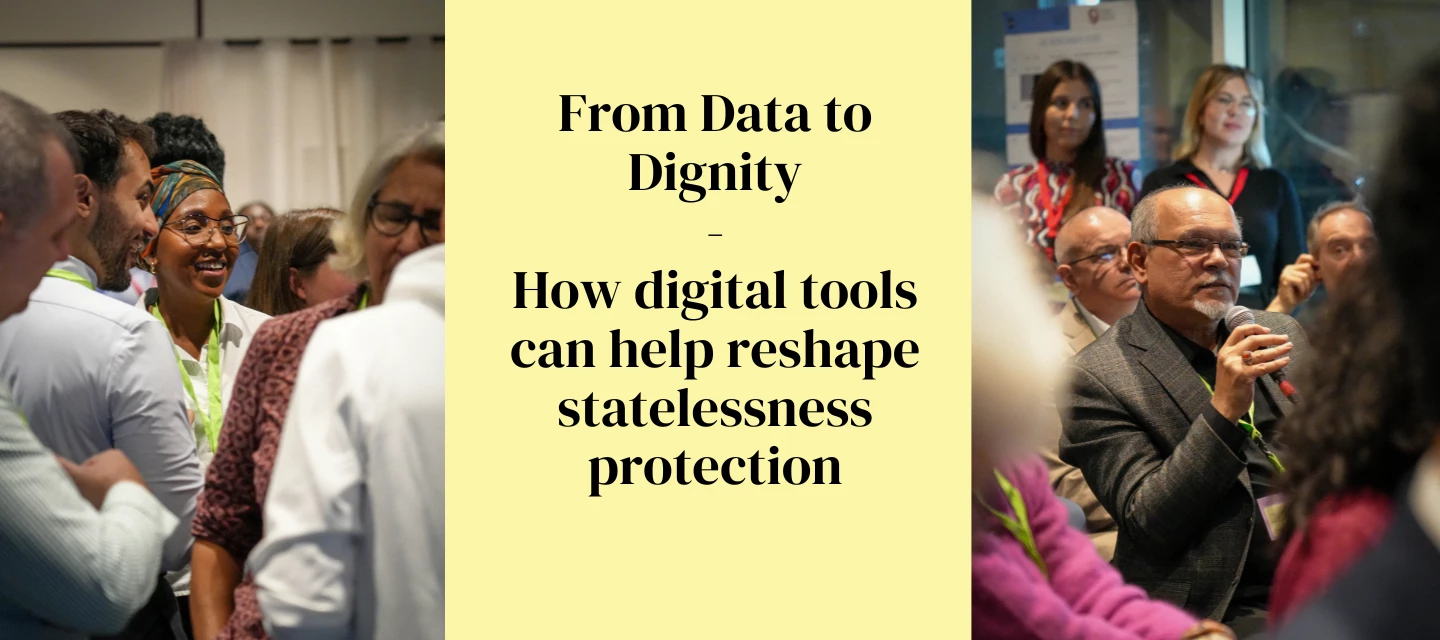
At this year’s Statelessness & Innovation: Building Power Through Collective Action conference, one question echoed through the auditorium: What does protection look like when it truly works — and who is responsible for making it happen?The session “From Recognition to Rights: The Future of Statelessness Protection in Europe” brought together practitioners, advocates, community members, and institutional actors from Germany, the Netherlands, Czechia, and across Europe. What emerged was not just a comparative overview of systems, but a sharper understanding of why so many people remain unprotected — and what it will take to change that. The Central Fault Line: IdentificationEarly reflections from the Statelessness Index briefing set the tone. Across Europe, the landscape is full of promising practices — stronger data collection, clearer local initiatives, developing procedures — yet the same structural weakness repeats itself everywhere:Recognition alone does not guarantee rights.
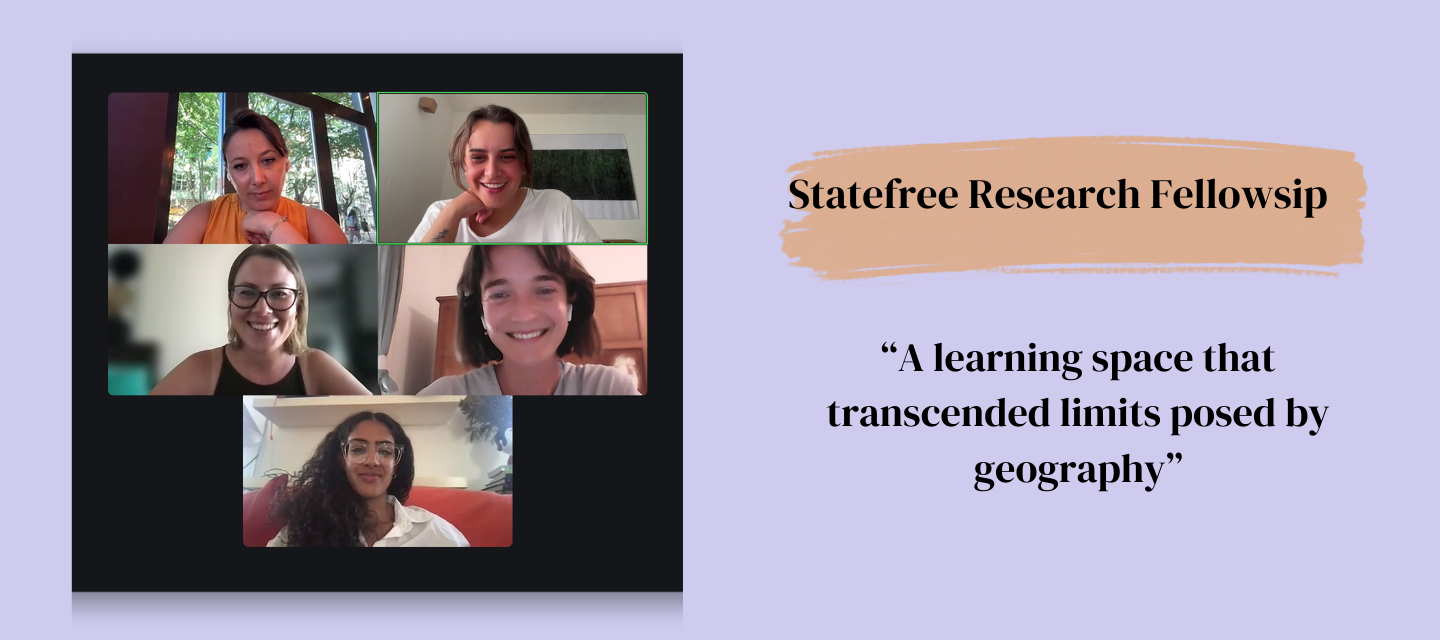
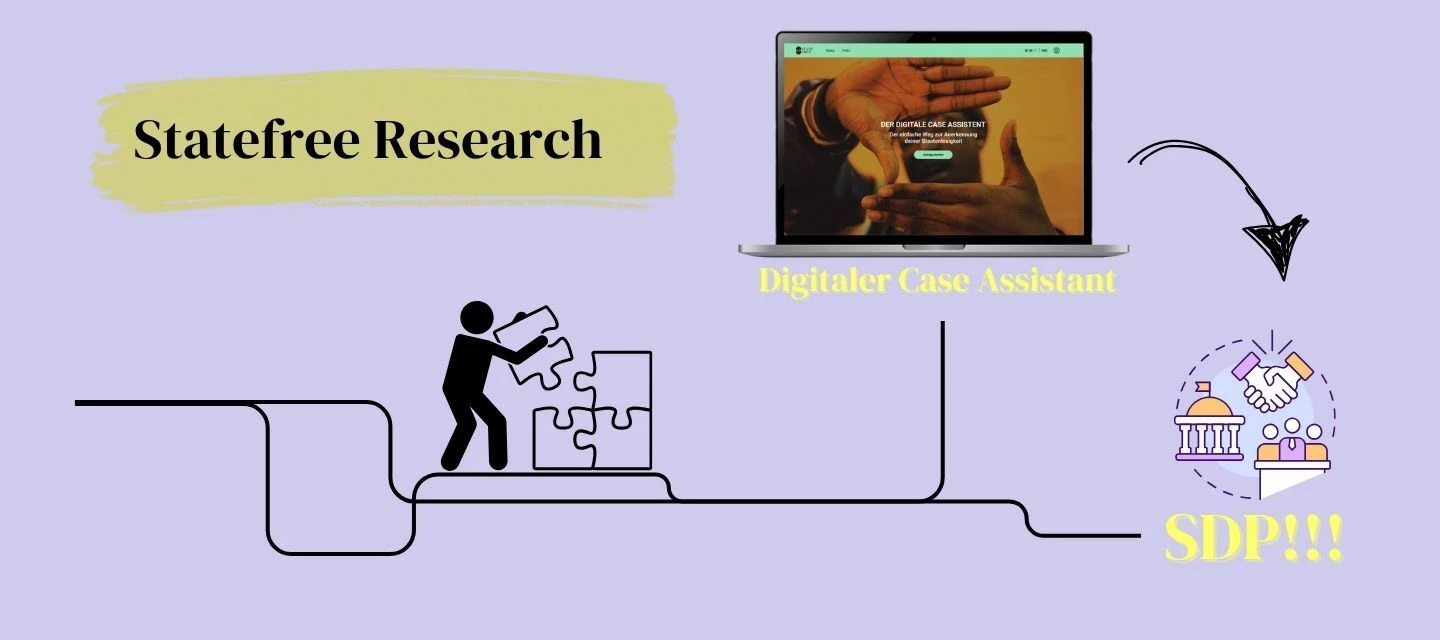
by Margarida Farinha and Aleksandra SemeriakIn 2023, Statefree initiated a research fellowship that offered a much-needed insight into the practical barriers stateless people face in Germany, one of the many countries still lacking a statelessness determination procedure (SDP). The findings not only provided more visibility to the issue but also underscored the need for urgent actions: while we continue advocating for the implementation of an inclusive SDP in the country, we must already act to support people navigating this unknown pathway to recognition.Two years later, at the Statelessness & Innovation Conference, jointly organised with the European Network on Statelessness (ENS) in November 2025, we were proud to publicly introduce our tool in the making: the Statefree Case Assistant, an idea that emerged out of necessity and has since been shaped and co-designed together with our valuable community impacted by statelessness.During the conference, our Innovation Lab “From Data
Did you know that 117.935 people are affected by statelessness in Germany? At the end of 2020, the German Federal Statistical Office (Destatis) counted 26.445 stateless people and another 91.490 people with an unclear nationality. These numbers have been on the rise over the last years; especially the number of people with an ‘unclear nationality’ has increased significantly.This is partly due to the way Germany deals - or rather, does not deal - with identifying statelessness. Without a comprehensive statelessness determination procedure in Germany, the path towards getting an official statelessness status is often difficult, long and expensive. As a result, statelessness often remains unrecognized, with people instead being recorded with an ‘unclear nationality’. This becomes a human rights issue, since ‘unclear nationality’ does not give access to the rights a stateless person is entitled to, such as access to a travel document for stateless people and the possibility of naturalizat
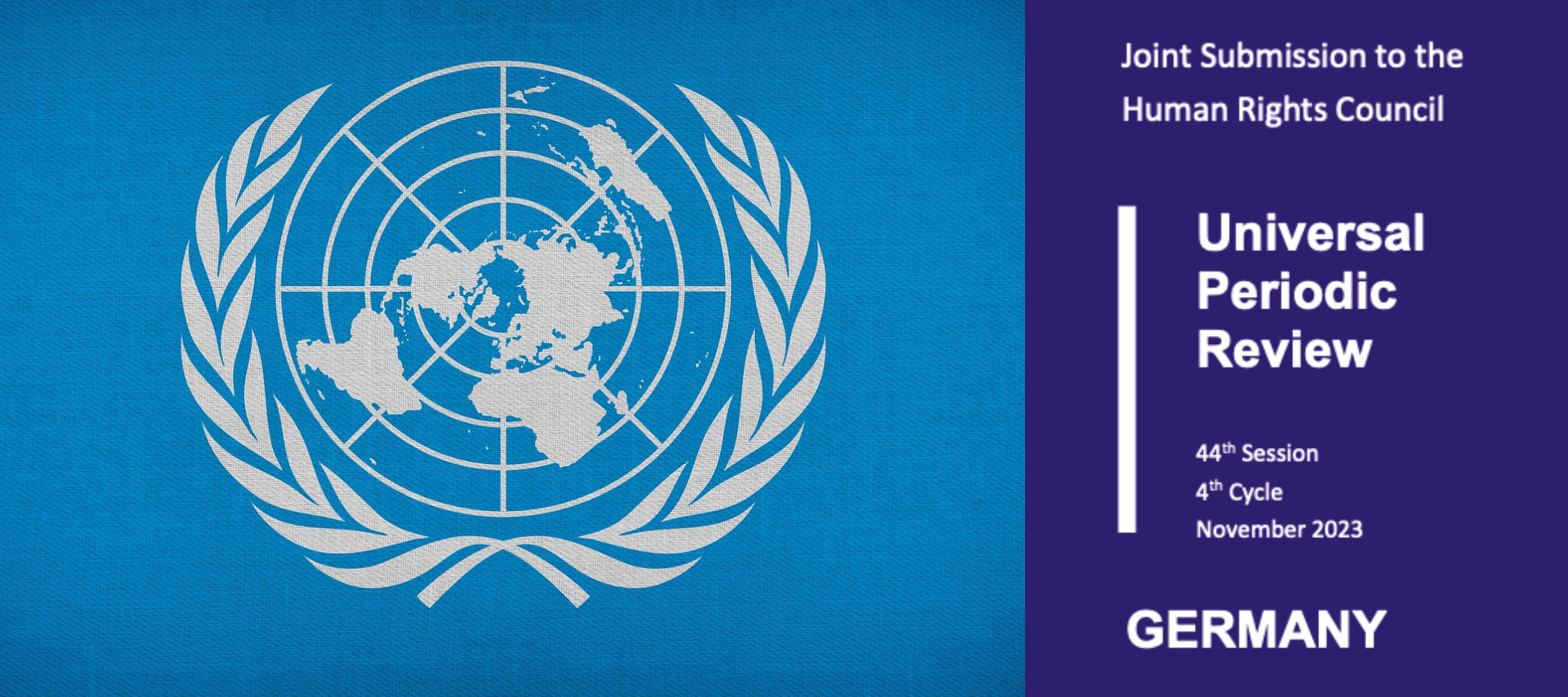
English Version below - Reading time 4 min Neue Informationen zur Menschenrechtssituation von Staatenlosen in DeutschlandLiebe Community, wir freuen uns zusammen mit dem Institute on Statelessness and Inclusion (ISI) und dem European Network on Statelessness (ENS), den ersten gemeinsamen Bericht zur Staatenlosigkeit in Deutschland an die Vereinten Nationen (United Nations – kurz UN) abzugeben. Mit dem Bericht hat Statefree den UN Informationen zur Menschenrechtssituation von staatenlosen Personen in Deutschland gegeben und konkrete Empfehlungen an Deutschland formuliert. In einem speziellen Verfahren “UPR”, hat das ENS, das ISI und Statefree geprüft, ob Deutschland die Menschenrechte staatenloser Personen achtet und umsetzt. Der gesamten Bericht ist im Anhang dieses Blog-Artikels zu finden (siehe unten). Was ist das Universal Periodic Review (kurz UPR) ?Die allgemeine regelmäßige Überprüfung (UPR) ist ein Instrument des Menschenrechtsrats der Vereinten Nationen, welches die Menschenr
123.700 people in Germany are affected by statelessness (see here). Of these, 29.500 are registered with a recognised stateless status, while 94.200 are still registered with an undetermined nationality and therefore have no access to the rights stateless people are entitled to. While these numbers have been growing and there is an increasing political and public awareness about the issue, there is still no comprehensive statelessness determination procedure in place in Germany. How can we collectively develop empowering and enabling solutions that lead to sustainable social and political change? Knowledge is power. Knowledge is political. It matters which questions are asked. It matters who asks the questions. It matters who answers the questions. And it matters who listens to the answers and how those answers are interpreted and shared. One thing we have learned over the last years is the amount of knowledge and expertise that exists in the Statefree community. And that in order to b
Dear Statefree-Community, we are four Master's students at the University of Hamburg, majoring in Criminology and Sociology. As part of a research project with the working title: “Experiences of Statelessness Among Palestinians in Germany,” we are investigating the experiences of individuals of Palestinian origin living in Germany regarding statelessness.With our study we hope to contribute to a scientific topic that is still significantly underrepresented in society as well as in academia and, in our opinion, deserves more attention.For our study, we are looking for interview partners who live in Germany and are affected by statelessness due to their Palestinian origin. Who we are looking forWe are interested in perspectives from people who are officially considered 'stateless' (XXA) as well as from people whose nationality is regarded as 'unresolved' (XXX) by the German authorities.If you are living in Hamburg or Berlin we conduct face-to-face interviews. If you are living further
Zum Jahresende 2024 wurden neue Zahlen zu Staatenlosigkeit in Deutschland veröffentlicht. Zum ersten Mal seit 2022 ist die Zahl der betroffenen Menschen gesunken. Das ist ein bemerkenswertes Signal – doch die Zahlen werfen auch neue Fragen auf. Wir haben für euch die wichtigsten Zahlen zusammengefasst und daraus einige Ableitungen getroffen. Ein Blick auf die EntwicklungEnde 2024 lebten in Deutschland rund 123.500 Menschen ohne anerkannte Staatsangehörigkeit. Im Vergleich zu 2023 (125.755) ist das ein Rückgang um etwa 2.500 Personen.Von diesen 123.500 sind 28.815 offiziell als staatenlos anerkannt, während 94.715 unter der Kategorie „ungeklärte Staatsangehörigkeit / ohne Angabe“ geführt werden.Besonders betroffen sind junge Menschen: Insgesamt leben 45.665 Minderjährige ohne Staatsangehörigkeit in Deutschland. Rund 70 Prozent von ihnen sind hier geboren. Das zeigt, wie sehr das Problem auch die zweite Generation betrifft. Einbürgerungen auf RekordniveauEin Grund für den Rückgang sind d
Selam selam,mein Name ist Jael :) Ich studiere Erziehungs- und Politikwissenschaften und möchte mich in meiner Abschlussarbeit vor allem biografisch mit den subjektiven Auswirkungen der Nicht-Anerkennung von im Ausland erworbenen akademischen Abschlüssen bzw. Titeln befassen.Dafür suche ich Personen, deren im Ausland erworbener Hochschulabschluss in Deutschland nicht anerkannt wurde und die im Rahmen eines Interviews über ihre Biografie sowie die subjektiven Auswirkungen dieser Nicht-Anerkennung sprechen möchten.Das Interview dauert etwa 20–45 Minuten, wird als Audiospur aufgezeichnet und ausschließlich zu Forschungszwecken verwendet (weitere Informationen gerne auf Anfrage). Aufgrund fehlender Ressourcen kann das Interview nur auf Deutsch stattfinden. Interviewort: persönlich oder digital.Ich freue mich wenn deine Biografie, ein Teil meiner Forschungsarbeit werden kann! Im Anhang gibts ein Gesuche, falls ihr dies in weiteren Communitys/Gruppe teilen wollt/könnt. Hello,My name is Jael.
In Deutschland leben über 123.000 Menschen ohne eine anerkannte Staatsangehörigkeit. Für viele bedeutet das Leben ohne Staatsangehörigkeit oder ohne anerkannte Staatenlosigkeit: fehlende Rechte, mangelnder Zugang zu Bildung oder Gesundheitsversorgung, und ein Leben in ständiger Unsicherheit und Unklarheit.Ein zentrales Problem dabei ist: Es gibt in Deutschland bis heute kein standardisiertes Verfahren zur Feststellung von Staatenlosigkeit. Die Feststellung von Staatenlosigkeit ist kein rein juristisches Detail – sie ist die Grundlage dafür, dass Menschen, die von Staatenlosigkeit betroffen sind, Zugang zu ihren Rechten erhalten. Gleichzeitig kann ein klar geregeltes Verfahren die Verwaltung entlasten, Entscheidungen nachvollziehbar machen und Frustration auf beiden Seiten reduzieren. Ob und wie Staatenlosigkeit überhaupt anerkannt wird, hängt derzeit oft vom Bundesland, der einzelnen Behörde oder von der jeweiligen Sachbearbeiter*in ab. Die Folgen davon sind gravierend, besonders für s
Dear Readers of the Statefree Community,My name is Ronja Pröllochs, I am studying Social Work and Language, History and Cultures of the Middle East and I am currently writing / working on my bachelor thesis on the topic of statelessness, since I worked to citizenship before and then stumbled upon this as I would say human rights problem. Since I would ideally be working on filmography, I wanted to ask if there are people without citizenship in the community who could imagine being interviewed and (potentially) filmed, if not though that would also be more than okay. I would be happy to hear from you either way. In the interviews, I would like to ask questions about the circumstances and feelings of people who are de facto or de jure stateless in order to create empathy and a greater awareness of the issue.I will be happy to answer any further questions you may have.I would be delighted to hear from youYours sincerelyRonja Pröllochs
To maximize social media marketing ROI, focus on creating engaging content tailored to your audience's interests and preferences. Utilize analytics to track performance metrics such as engagement rates, click-throughs, and conversions. Implement targeted advertising campaigns to reach specific demographics effectively. How can businesses effectively measure the success of their social media marketing efforts?
Hello everyone!My name is Cecilia and I am a PhD researcher at the University of Sussex, UK. My research focuses on the identification of stateless asylum seekers in Germany, Italy, and Switzerland. It aims to shed light on the multiple challenges faced by stateless persons applying for international protection in Europe and to propose some avenues for improvement.For the purpose of my research, I am interviewing stateless persons/persons at risk of statelessness who have gone through the asylum procedure in the three countries (including persons who are still in the procedure, recognized refugees, persons who have been granted some other form of protection, persons whose asylum application was rejected and have not been granted any form of protection).If you are stateless/at risk of statelessness and have applied for asylum in Germany, I would love to hear from you! Please get in touch with me at c.manzotti@sussex.ac.uk. I will provide you with additional information about my research
By Lea Böhringer[German version below 👇🏼]Statelessness – whenever I bring up my dissertation topic in conversations with my friends, colleagues or even professors, many of them ask me this exact same question: What exactly do you mean by this? I, myself, had no idea of the concept a while ago. This comes from a privileged perspective where I never had to worry about passport issues. I first came across someone with a lived experience of statelessness when I made an acquaintance with a refugee from Eritrea. We became friends and he told me about how he was stuck in limbo in Germany because he has no access to his papers due to fleeing his country and cannot prove his identity. He hadn’t left Germany or seen his family for 7 years. I kept thinking about his situation for months until I came across the term statelessness and I was struck by what I found. The UN counts 4-10 million stateless people worldwide – while so many cases stay unreported. The Statelessness Convention of 1954 defi
[English version below 👇🏼]Bist Du oder warst Du jemals von Staatenlosigkeit in Deutschland betroffen? Hast Du Lust und Interesse, Deine Erfahrungen mit uns in einem Interview zu teilen? Unser Projekt ist ein community-basiertes Forschungsprojekt in Zusammenarbeit mit drei Fellows, von denen jeder verschiedene Perspektiven aus persönlichen Erfahrungen und unterschiedlichen sozialen und akademischen Hintergründen einbringt, um nachhaltige Lösungen für Staatenlosigkeit zu finden. Unser Ziel ist es, die Einführung eines Feststellungsverfahrens für Staatenlose in Deutschland vorzuschlagen, um sicherzustellen, dass staatenlose Personen ungehinderten Zugang zu ihren grundlegenden Menschenrechten erhalten. Wir sind auf der Suche nach Interviews mit (ehemals) staatenlosen Menschen, die uns helfen, diese Forschung inklusiv zu gestalten. Du kannst uns helfen, etwas zu verändern!👉🏼 Dein Interview wird uns dabei helfen, Deine individuellen und kollektiven Erfahrungen und Herausforderungen mit d
Hi everyome, my name is Eleanor (she/her). I am a Masters student at the University of Sussex looking for research connections for a potential project. I am hoping to research the intersection of LGBTQ+ identity and statelessness. I would appreciate any connections to people already working on/ interested in the topic. I have the chance to do a research placement so can offer free researcher time. Primarily I want to produce research that is:Useful for stateless communities and advocacy Centres the voices of stateless peopleso I can be flexible on the exact methods, direction and topic of the research. Any input or links are very welcome and appreciated! Thank you for your time :)
Hi everyone, Statefree’s partner Apatride Network is still looking to interview more stateless people, refugees and other forcibly displaced people about their (our) experiences in accessing banking and other financial services. The interviews are anonymous and very simple. We will use the valuable information of these experiences in our cooperation with several international law firms, to draft a short report that we will in turn use to contact good and bad practices financial actors. Success of this project means better financial inclusion for the most vulnerable populations. Please email me if you would like to contribute or if you know anyone who would, aleksejs@apatride.eu
Welcome!
Dear Statefree community,I would like invite you to be part of a photovoice-project in order to make statelessness more visible and create positive change together! For more information see the flyer below!18 days I uploaded my first flyer, in the meantime i made some changes, created a new version and am know hoping to reach out and get to know you/people, who would like to participate. I am very excited and would love to contribute something useful and interesting. If you have any questions or further ideas, please contact me! Join an information session to find out more!NoraPhotovoice-ProjectInvitation to information session
Hello everyone!I am new here and have found this website as I was researching more on statelessness. I am Soumaia, currently a Master’s student at the University of Birmingham (UK). I am conducting a study on public perception of statelessness and would be extremely grateful if you could participate in my survey. Your perspective is vital for my research, and by sharing your insights, you will help me and others gain a deeper understanding of this crucial issue as we are all learning together. Thank you so much! 🤗 If you are interested simply follow this link to complete the survey: https://qfreeaccountssjc1.az1.qualtrics.com/jfe/form/SV_3IaD7A9G2RgSH9Y If you need more information or if you would like to share anything in relation to the study please contact me via email : sxe828@student.bham.ac.uk
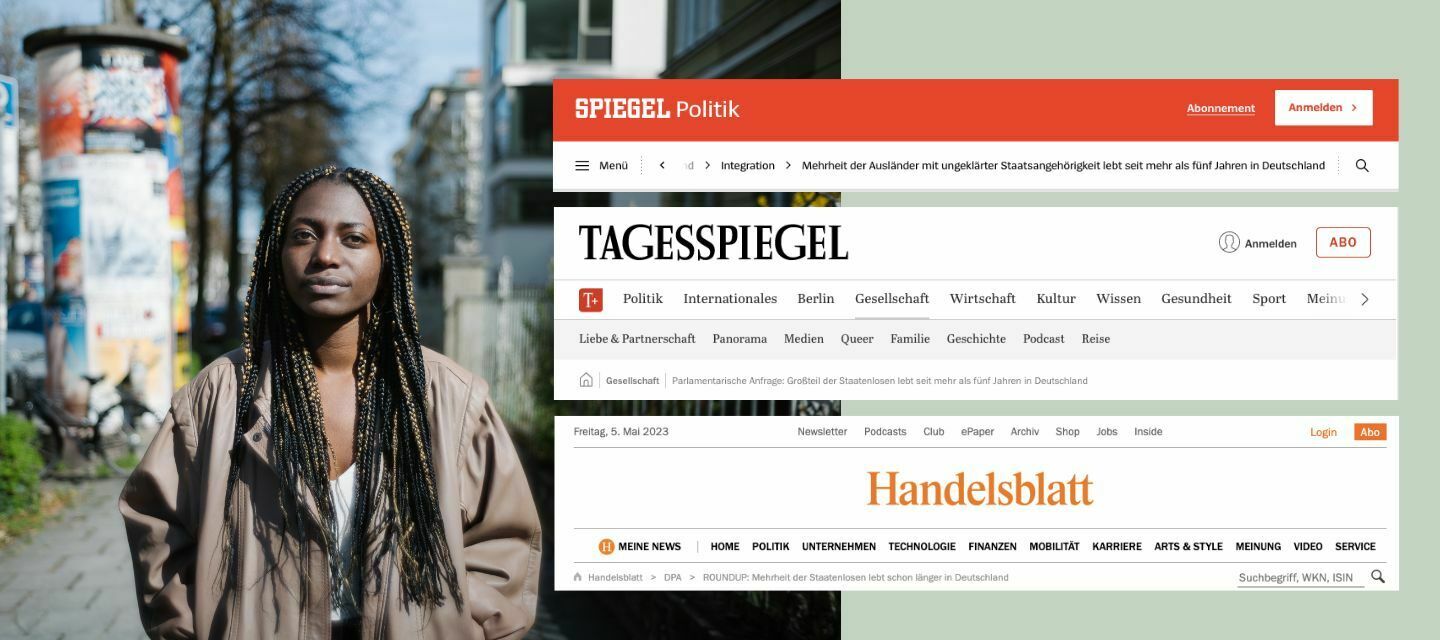
[Summary: New data on statelessness in Germany reveals the urgent need for action. MPs of the Green and the Left Party release statement about the need for action and urge the government to resolve the situation of stateless people. Link to the parliamentary question below]In the past 7 days, the issue of statelessness has been covered more often in German press than probably at any time in the last 7 years. The reason for this: a new parliamentary question has revealed the following new findings - and many more - about statelessness in Germany: At least every tenth stateless person in Germany, was also born in Germany. More than half of the persons with undetermined citizenship have been living in Germany for more than 5 years. The issue of statelessness has not been discussed in the sessions on nationality for the last ten (!) years. Filiz Polat, a Green Member of German Parliament (MP) and migration expert, summed it up quite well in her statement : "For a long time now, Germany h
SVR Policy Brief: Life without a passport: The situation of stateless people in GermanyThe Expert Council on Integration and Migration (Sachverständigenrat) has published a policy brief about statelessness in Germany. It confirms Statefree’s advocacy and visibility work and shows that stateless people are confronted with multiple barriers to participation and rights. The policy brief confirms that Germany is currently failing to meet its obligations under international conventions and political change is necessary. Important numbers are highlighted: 16% of people with a recognized stateless status and 32% of people with a so-called undetermined nationality were born in Germany. After Syria, Germany is the second most frequent country of birth of stateless people in Germany. This shows that statelessness is produced in Germany due to its restrictive nationality law and inadequate birth registration practices. The policy brief also references the scientific work by Statefree team member
Hi everyone! I was super excited to find this community so thanks for having me.My name is Sophie and I am currently studying at the University of Gothenburg in Sweden, though am from New Zealand. I am currently working on my Master’s thesis on the topic of climate change and statelessness in Europe. Essentially, I want to look at how stateless people in Europe have been and will continue to be affected by climate change. If anyone knows any organisations/people working in the civil society space with stateless people (particularly in Italy, as I think this will be my focus) I would be glad to hear about it!Feel free to send me a message to chat as well 😊
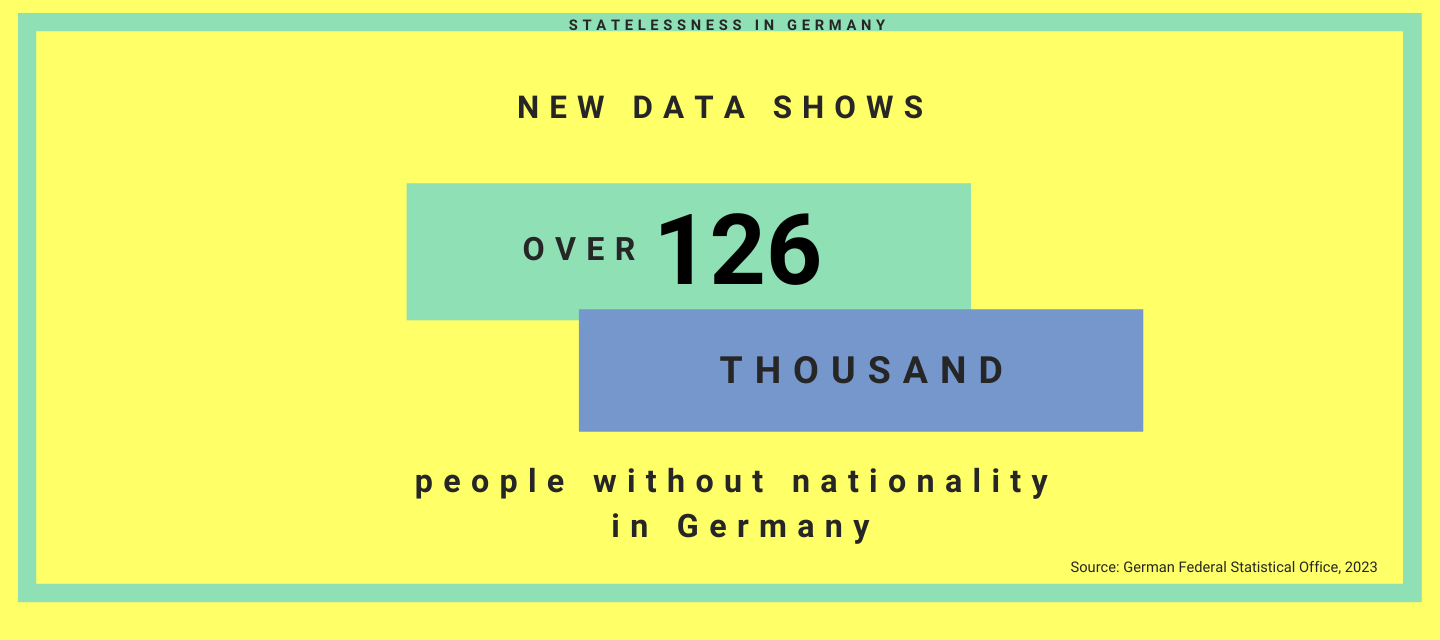
On March 9 the German Federal Statistical Office published the latest data on statelessness in Germany. The new figures reveal a significant increase. According to the German Federal Statistical Office, at the end of 2022, 29.455 people were registered as stateless, while an additional number of 97.150 people in Germany were registered with a so-called “undetermined nationality“. This makes a total of 126.605 people in Germany living without nationality. In comparison: at the end of 2021 Germany recorded a number of 94.945 people with “undetermined nationality” and 27.940 people who are officially recognised as stateless (Read more about it here).Overall „the number of people registered as stateless in Germany has doubled since 2014“ the article elaborates. Find the full press release here in English and in German. A comprehensive and more detailed report of the „statistics of foreigners“ in Germany is planned to be published in April. We are happy to keep you posted on new developm
Hi, my name is Jessie (she/her) and I am a community ally, living in the UK. I am a trainee clinical psychologist, working in the national healthcare service and at University College London. My research team and I are running a project where we are hoping to speak with people living in the UK who are part of the statefree community and considered stateless by the UK government (or have been in the past), to understand how this has influenced their well-being or mental health. The project came about from working in mental health services and hearing from people who have lived experiences of statelessness.I’ve joined here as an ally and hope to just listen and learn, thank you for having me!
Hello all!I am currently researching ways to harness the power of first-person storytelling as an educational tool, with the goal of pushing for the recognition of statefree people as the experts on their experiences as opposed to academic researchers.As part of my research, I am currently conducting a survey to better understand current awareness and attitudes towards statelessness. While my research is focussed on policies within the United States, I am looking to learn about global opinions towards statelessness. My hope is to hear from both statefree persons, as well as allies to the community. If you can spare 5 minutes, I would greatly appreciate your responses. This survey is completely anonymous, in English, and will be used only as part of an academic thesis.Awareness and Attitudes Towards Statelessness Thank you!
Already have an account? Login
No account yet? Create an account
Enter your E-mail address. We'll send you an e-mail with instructions to reset your password.