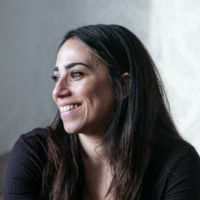
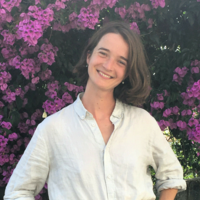
Deutsch ✨Hallo liebe Freundinnen und Freunde,ich bin Chiara, Dokumentarfotografin und wohne zwischen Berlin und Beirut. Seit einigen Jahren arbeite ich zum Thema Staatenlosigkeit und hatte bereits die Ehre, zwei STATEFREE-Kampagnen zu fotografieren. Jetzt möchte ich mich auf Europa, besonders Deutschland, konzentrieren und einige von euch auf euren Wegen begleiten: im Alltag, in lauten und leisen Momenten, aber vor allem in Freundschaft, Familie und Gemeinschaft.Ich arbeite multimedial (Foto und Video) und würde euch für das Projekt mehrmals treffen. So können wir eine gemeinsame Bild- und Erzählsprache entwickeln und uns besser kennenlernen. Wenn ihr eure Identität nicht zeigen möchtet, ist das natürlich völlig in Ordnung. Fotos und Interviews können anonym bleiben.Das Outcome des Projekts ist noch in Planung. Es sollen Veröffentlichungen in verschiedenen Magazinen und Zeitungen sein, aber vor allem eine vertiefte Auseinandersetzung mit dem Thema in Form einer Ausstellung Installation. Der Produktionszeitraum wird voraussichtlich im Januar/Februar 2026 und dann noch einmal im Sommer/Herbst 2026 stattfinden.Ich würde mich total freuen, einige von euch näher kennenzulernen und ein gemeinsames Projekt zu entwickeln.Im Anhang findet ihr einige meiner Arbeiten und ihr könnt noch mehr sehen auf Instagram @chiara.apellido oder Website https://chiarawettmann.com/Wenn du Interesse hast melde dich einfach unter +49 1577 63 64 566 oder E-Mail: info@chiarawettmann.com oder Instagram @chiara.apellido Englisch ✨Hello dear friends,I’m Chiara, a documentary photographer based between Berlin and Beirut. For the past years, I’ve been working on the topic of statelessness and had the honor to photograph two STATEFREE campaigns. I’m now focusing on Europe, especially Germany, and would love to follow some of your paths. Your daily lives, the loud and the quiet struggles, but above all: friendship, family, and community.I usually work with both photo and video, and we’ll meet several times to build trust and a shared vision of the project. Of course, if you don’t want to show your identity, that’s absolutely fine. Photos and interviews can stay anonymous.The outcome of the project is still in planning. It might include publications in different magazines and newspapers, but above all, a deeper exploration of the topic in the form of an exhibition installation. The production period will most likely take place in January/February 2026 and again in summer/autumn 2026.I’d be very so happy to get to know some of you better and to develop a project together.Attached you’ll find a selection of my work, and you can see more on Instagram @chiara.apellido or on my website: https://chiarawettmann.com/If you are interested just contact me. phone. +49 1577 63 64 566, Email: info@chiarawettmann.com or Instagram @chiara.apellido
At this year’s Statelessness & Innovation: Building Power Through Collective Action conference, one question echoed through the auditorium: What does protection look like when it truly works — and who is responsible for making it happen?The session “From Recognition to Rights: The Future of Statelessness Protection in Europe” brought together practitioners, advocates, community members, and institutional actors from Germany, the Netherlands, Czechia, and across Europe. What emerged was not just a comparative overview of systems, but a sharper understanding of why so many people remain unprotected — and what it will take to change that. The Central Fault Line: IdentificationEarly reflections from the Statelessness Index briefing set the tone. Across Europe, the landscape is full of promising practices — stronger data collection, clearer local initiatives, developing procedures — yet the same structural weakness repeats itself everywhere:Recognition alone does not guarantee rights. Identification is the missing link.Participants recognised this not as a technical detail but as the defining barrier. Without a dedicated procedure, the system simply does not see people who need protection — and what is invisible cannot be safeguarded.Germany stands as the clearest example. The absence of an SDP is not an administrative oversight; it produces real, measurable consequences. People move between authorities without a clear point of responsibility, rely on discretionary decisions, and spend years in limbo. In a country with the capacity and expertise to design an effective mechanism, the gap is increasingly indefensible. Where Leadership and Innovation Are EmergingDespite these systemic shortcomings, the session made one thing clear: innovation is happening — often from the ground up.Local leadership in the Netherlands shows how municipalities can build protection-oriented practices even without perfect national frameworks. Strategic litigation in Czechia demonstrates how targeted legal action can force institutions to align with international standards. ENS tools and guidance help practitioners understand when statelessness is at play, ensuring that cases do not fall through procedural cracks. The Statefree Case Assistant offers a practical, scalable solution for navigating documentation, appointments, and communication with authorities — reducing confusion for both applicants and institutions. None of these examples claim to be full solutions. But together, they show that progress grows wherever actors take responsibility instead of waiting for structural reform. A Shift Toward Collective ResponsibilityThe co-creation segment pushed the conversation from observation to ownership. Participants named barriers with striking clarity: unclear processes, siloed decision-making, missing partnerships, limited awareness among frontline officials, and the ongoing tension between person-centred and process-centred systems.Yet they also identified opportunities — from community-institution collaboration to better use of European tools to cross-border learning between practitioners.At the “ideas wall,” a pattern emerged: We know what is missing. We also know what works. The real question is: who takes the next step? From Insight to ActionThe session closed with a commitment round — not symbolic, but specific. Participants were asked to name one action they or their organisation would take after the conference. Some pledged to introduce internal reforms; others committed to new partnerships or to advocating more forcefully for a dedicated procedure. Many emphasised elevating lived experience as core expertise.These commitments reflect the essence of the session:Protection is not something Europe needs to reinvent. It is something we need to operationalise — consistently, collaboratively, and with accountable institutions.
Zum Jahresende 2024 wurden neue Zahlen zu Staatenlosigkeit in Deutschland veröffentlicht. Zum ersten Mal seit 2022 ist die Zahl der betroffenen Menschen gesunken. Das ist ein bemerkenswertes Signal – doch die Zahlen werfen auch neue Fragen auf. Wir haben für euch die wichtigsten Zahlen zusammengefasst und daraus einige Ableitungen getroffen. Ein Blick auf die EntwicklungEnde 2024 lebten in Deutschland rund 123.500 Menschen ohne anerkannte Staatsangehörigkeit. Im Vergleich zu 2023 (125.755) ist das ein Rückgang um etwa 2.500 Personen.Von diesen 123.500 sind 28.815 offiziell als staatenlos anerkannt, während 94.715 unter der Kategorie „ungeklärte Staatsangehörigkeit / ohne Angabe“ geführt werden.Besonders betroffen sind junge Menschen: Insgesamt leben 45.665 Minderjährige ohne Staatsangehörigkeit in Deutschland. Rund 70 Prozent von ihnen sind hier geboren. Das zeigt, wie sehr das Problem auch die zweite Generation betrifft. Einbürgerungen auf RekordniveauEin Grund für den Rückgang sind die gestiegenen Einbürgerungszahlen:2024 wurden 5.960 Personen ohne anerkannte Staatsangehörigkeit eingebürgert - weit mehr als in den Jahren davor. Zum Vergleich: 2023 waren es 5.140, 2022 nur 3.740.Auch viele Minderjährige wurden eingebürgert, darunter über 2.000 Kinder und Jugendliche, die zuvor als staatenlos registriert waren. Aber: Was ist darüber hinaus passiert?Eine klare Bilanz lässt sich nicht allein durch Einbürgerungen ziehen. 2024 gab es 11.740 Abgänge staatenloser Personen aus dem Ausländerzentralregister. Nur ein Bruchteil davon durch Tod. Die meisten Abgänge erfolgten durch sogenannte Tilgungen – also Löschungen oder Korrekturen im Register. Dahinter können fehlerhafte Registrierungen stecken, aber auch Zuschreibungen von Nationalitäten, die faktisch nicht zutreffen. Möglich sind außerdem Ausweisungen oder Fortzüge.Das wirft eine wichtige Frage auf: Spiegelt der Rückgang tatsächlich eine Verbesserung für Staatenlose wider – oder handelt es sich vor allem um eine statistische Umverteilung in andere Kategorien? Ein ermutigendes Signal – und gleichzeitig ein WarnrufPositiv ist: Seit Jahren sehen wir zum ersten Mal, dass die Zahl der Staatenlosen in Deutschland sinkt. Das zeigt, dass sich Verwaltung und Politik zunehmend mit Staatenlosigkeit beschäftigen – und es ist auch ein Hinweis darauf, dass unsere Arbeit und die Arbeit unserer Partner*innen für mehr Sichtbarkeit sorgt.Aber: 70 Prozent der Kinder ohne Staatsangehörigkeit sind in Deutschland geboren. Sie starten ihr Leben hier ohne rechtlich gesicherte Zugehörigkeit. Solange es kein geregeltes Verfahren zur Feststellung von Staatenlosigkeit gibt, bleibt die Situation für sie und ihre Familien prekär.Was wir daraus ableitenDie aktuellen Zahlen sind ermutigend, aber sie bleiben schwer zu interpretieren. Klar ist:Einbürgerungen nehmen zu – das ist ein Fortschritt. Der Rückgang der Gesamtzahlen wirft Fragen auf – insbesondere zu „Tilgungen“ und unklaren Kategorisierungen. Für Kinder und Jugendliche bleibt die Lage alarmierend. Eure Mitarbeit in Bereichen der Sichtbarmachung von Staatenlosigkeit ist wichtiger denn je, denn: Wir wollen den Rückgang der Zahlen, das Momentum und die teilweisen Erfolge für uns als Rückenwind nutzen. Nur zusammen können wir laut sein.Außerdem: Neben den offiziell ausgewiesenen Kategorien „staatenlos“ und „ungeklärt/ohne Angabe“ existieren im Datenbestand von Destatis noch weitere Kategorien. Dazu zählen z. B. „Palästinensische Gebiete“ (in Deutschland wird Palästina als Nation nicht anerkannt), sowie Altkategorien, wie z.B. „Sowjetunion“ und „Jugoslawien“ (Sozialistische Föderative Republik bis 1992 bzw. Bundesrepublik bis 2003). Unter diesen Einträgen finden sich rund 30.000 Personen, die entweder, zusätzlich zu den erhobenen offiziellen Zahlen, staatenlos sind oder ein erhöhtes Risiko tragen, staatenlos zu werden.Mit unserer Arbeit in den letzten Jahren haben wir diese Altkategorien immer wieder sichtbar gemacht. Sie zeigen ein weiteres Problem der aktuellen statistischen Erfassung: Viele Betroffene verschwinden in Sammelkategorien, die historisch überholt sind und keine reale Staatsangehörigkeit mehr abbilden. Damit wird Staatenlosigkeit auch hier unsichtbar gemacht – ein weiterer Hinweis darauf, wie dringend ein geregeltes Feststellungsverfahren gebraucht wird.Unsere Forderung bleibt deshalb deutlich:Deutschland braucht endlich ein geregeltes Verfahren zur Feststellung von Staatenlosigkeit. Nur so kann sichergestellt werden, dass die Zugehörigkeit von Menschen nicht von statistischen Kategorien abhängt, sondern von klaren, fairen und transparenten Regeln.
No account yet? Create an account
Enter your E-mail address. We'll send you an e-mail with instructions to reset your password.
Sorry, we're still checking this file's contents to make sure it's safe to download. Please try again in a few minutes.
OKSorry, our virus scanner detected that this file isn't safe to download.
OK